Wednesday, December 19, 2012

Global Scope: FIFA Club World Cup

The world's most popular sporting event is the FIFA World Cup, an international football competition played by the top 32 national teams from all the continents. The World Cup is hosted by a different country every four years since 1930, and the last World Cup was in 2010 hosted by South Africa and won by Spain. The next FIFA World Cup will be held in Brazil for the second time (1930, 2014). 

The World Cup is the major tournament where different nations can test their quality against each other, and from all over the world. When dealing with club football there is only one tournament every year where teams from all over the world can play each other, the FIFA Club World Cup. The Club World Cup has been organized entirely by FIFA in its current format since 2000, with a brief interruption of four years and a few modifications here and there. In the past the title of "World Champion" came from a match played between the champion of South America versus the champion of Europe. As of 2012, most teams qualify to the FIFA Club World by winning their continental competitions, be it the Asian AFC Champions League, African CAF Champions League, North American CONCACAF Champions League, South American Copa Libertadores, Oceanian OFC Champions League or European UEFA Champions League. Along with the fore mentioned, the host nation's national league champions qualify to participate in the tournament as well. The competition is a single-elimination tournament in which teams play each other in one-off matches, with extra time and penalty shootouts used to decide the winner if necessary; it features seven clubs competing over a two week period.


In the 2012 version of the tournament, the Brazilian team Corinthians FC beat the English Chelsea FC by a score of 1-0. The goal was scored by Corinthians' Peruvian star striker José Paolo Guerrero. The competition was held in two different host cities in Japan, Toyota and Yokohama in two state-of-the-art stadiums. This year's clubs were: Corinthians FC (Brazil), Ulsan Hyundai (South Korea), Monterrey (Mexico), Chelsea FC (England), Sanfrecce Hiroshima (Japan), Auckland City (New Zealand), and Al-Ahly (Egypt). This tournament was a special one because of the involvement of Corinthians FC. Known for having the biggest and most passionate fan base in São Paulo, the fans traveled in bunches to Japan. For the first time in this tournament's history was the stadium actually full with fans from one of the team's playing, and not only sympathizers and locals. This tournament is also notorious for being more of a big deal for South Americans than for the Europeans. The truth is that the South American calendar makes it easier for clubs to travel to Asia with a longer time to prepare. This year Chelsea FC broke this tabu that European clubs aren't as into this title as the South Americans, with numerous interviews with players and coach Rafa Benitez emphasizing how important this victory would be. It was also very clear after the match was over, and many Chelsea players were either sobbing or just very disappointed. Also, with Corinthians FC winning the Club World Cup this year, Europe and South America are now tied with 26 wins each. 

José Paolo Guerrero, scored Corinthians' two goals in the Club World Cup

Tuesday, December 18, 2012

Inflation, Inflation, Inflation: The Contract Race in MLB

It is no secret that sports have become an international, multi-billion dollar business. The sport of baseball, in particular, has really become a cash cow. 162 games, 40,000+ seat stadiums, $10 beers, $100 jerseys; no wonder they have hundreds of millions of dollars to spend on free agents every year. My question for Major League Baseball teams is: Why are you continually overspending for players that are often old and over the hill? Throughout the post I will examine some of the most outrageous contracts of this and past off-seasons.

This off-season we have seen some prime examples of desperation signing or/and incredible over-spending. The fab of signing star players to ginormous contracts is nothing new, but it hit a new high (or low) in the winter between the 2007 and 2008 season. Vernon Wells at 7 years, $126 million was a lot, but that was just a teaser for what was to happen next: Alex Rodriguez signed a 10 year, $275 million contract. By far the largest contract signed in professional sports history. At the time the New York Yankees signed the third baseman, he was 33 years old and at the peak of his career. In the 2007 season, Rodriguez had one of the most impressive offensive seasons in MLB history. In 158 games, A-Rod hit .314, with 54 home runs and 156 RBIs, with a slugging percentage of .645. Even with these remarkable stats, many fans and baseball experts questioned the signing of a 33 year old player to a 10 year contract. Now, New York must be regretting this blunder. In the 5 seasons the monster contract was signed, he has averaged just 124 games, 130 hits, 26 home runs, and 90 RBIs per year. Yes, the man put fans in the seats, yes, he had the possibility of continuing the greatness he showed in 2007, and yes, he has struggled with injuries, but now New York fans hate him because of his inconsistency, he has clearly peaked and is on the downside of his career, and he is clearly not going to provide a great return on investment for the Yanks in years to come. The worst part about this for the Yankees, because after all they don't care about money, is that they will never be able to trade him because of his contract.


You would think that teams would see this and learn to not sign older players to huge contracts, but this and last off-season showed that is just not the case. Last year, it was Albert Pujols. At age 32, coming off of his worst statistical year since 2006, the Los Angeles Angels of Anaheim signed Pujols to a 10 year, $240 million contract. This is even more interesting than Rodriguez, because at least the Yankees had the decency to front-load A-Rod's contract. The Angels, on the other hand, thought it better to allow Pujols' contract to exponentially grow for the 10 years that it binds the two sides. Albert made just $12 million in 2012 and will make just $16 million in 2013, but beginning in 2014, he will earn $1 million more per year, starting at $23 million in 2014, eventually growing to $30 million in 2021, when Albert is 41 YEARS OLD. Yes, he will make $30 MILLION at 41 YEARS OLD. The Angels will pay Pujols $114 million of his contract after Pujols turns 37.


Now, this off-season, we are seeing a little bit different of a trend. A lot of players are being signed to shorter contracts, but at very inflated prices. David Schoenfield on ESPN.com said it best, "Five years and $75 million for a player coming off a .298 on-base percentage (B.J. Upton), and everyone is already referring to the deal as a bargain. Four years and $40 million for a 31-year-old center fielder (Angel Pagan), and nobody blinks an eye. Three years and $39 million for a catcher who hit .227 and likely will spend most of his time at first base (Mike Napoli), and the signing sort of makes sense. Three years and $20 million for a 37-year-old second baseman who posted a .684 OPS in 95 games with the Rockies in 2012 (Marco Scutaro), and the contract isn't roundly criticized." He also goes on the mention the ridiculous contract signed by Shane Victorino with the Boston Red Sox of 3 years, $39 million, at age 32. Without considering to two biggest free agent signings, which I will mention later, this off season has been plagued with over spending out of desperation. Teams want quick fixes and no long term commitment, and for that they are willing to pay inflated per-year rates.


Now to the big fish: Josh Hamilton and Zach Greinke. Hamilton signed a 5 year, $125 million contract with the Los Angeles Angels of Anaheim and Greinke signed a 6 year, $147 million contract with the Los Angeles Dodgers. Both teams have become new entries into the big market world of spending that previously only contained the Red Sox, Yankees, and Phillies. It is expected that both the Angels and the Dodgers will surpass the Red Sox in payroll this year, disrupting the top end of the payroll scale and really swapping around the order of spending. The question that still stands is whether this spending will actually lead to winning, and will this inflation in Major League Baseball ever stop?

Wednesday, December 12, 2012

Freshman Coop Advice


The fall term is coming to an end and finally there will be time to relax and not have to worry about school work.  After each term is over I like to look back and reflect on everything that went on during the past 10 weeks.  With interviews for my second coop going on I have been thinking about different things that I would have done during my freshman year to make my finding a coop much easier.  I have come up with three tips that will make your first coop experience much easier.  

My first tip is to take advantage of time off and do something productive to better your career.  I know most of you after your stressful first year want to relax all summer and enjoy yourself but this is the perfect time to try to find a summer internship and gain experience.  This is really helpful for students that do not have any experience in sports on their resume.  You will be able to gain a few months experience and have an advantage against some of your fellow classmates for coops.

My second tip is when the coop process starts do not forget to search outside of the Drexel system.  Many people want to go after coops with the Eagles and other big organizations that are listed on the Drexel website.  Many of the upper classman are going to go after these jobs most of which will probably have more experience than you.  So by going outside of the system you will not have to compete against your classmates for the position you want.  Another reason to go out and find something different is that the Drexel directory is very limited in options so you need to find other alternatives.  

My final tip that I am sure you have been told and will be continued to be told every year you are at Drexel is to network.  Meet as many people as possible and keep in touch with them.  They can help you later when looking for a job.  When a guest speaker comes in and talks to your class add them on Linkedin and thank them for the presentation.  The speaker will appreciate this and now you have made a contact that you can use.  Also make sure to keep in touch with former professors because they will help you out more if they can remember who you are and if you have a personal connection with them.

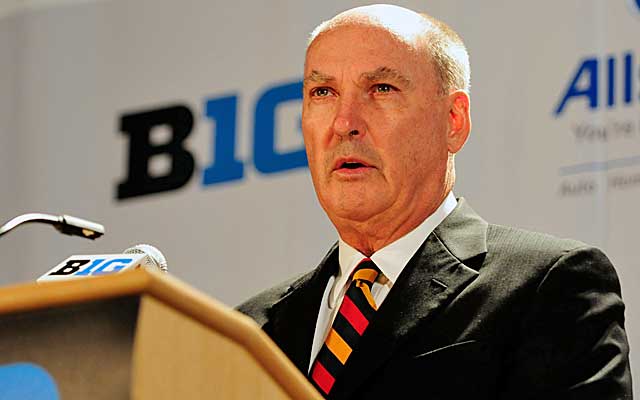
Limitless Financial Power, Unless You’re A Freshman: Can Anyone Stop the Big Ten Network?


If you didn’t catch on from my recent blog posts, I’m kind of partial to the Big Ten. Also, unless you’re living under a rock, you caught some recent news about the Big Ten. 

Let’s catch up any readers who began a hermitage in the last month: Maryland and Rutgers were approved to become the 13th and 14th members of the illustrious Big Ten Conference. So yes, the numbers still don’t make sense, but the dollar signs have athletic directors, conference officials, and university presidents not asking questions.

The Big Ten Network was already a powerful force in college athletics (I remember reading someone’s brilliant musings on that exact subject a few months ago.) Add in the New York and Baltimore/D.C. media markets (two of the largest on the East Coast) and we have the makings of an unstoppable media behemoth. Add in the recent news that each of the five “power leagues” would get an average of $75 million more per year than other FBS leagues under the college football playoff, and the money’s looking very, very good.

Furthermore, with Michigan State, Michigan, Ohio State, and Indiana all looking to be elite programs, and programs like Illinois, Wisconsin, Purdue, and newcomer Maryland who are far from slouches in their own right (ignore the early struggles of Wisconsin and Purdue. Combined, they have 255 total wins and five Sweet Sixteen appearances in the last five years), the Big Ten is arguably poised to be the premier college basketball conference in the nation (although the new look ACC has some great programs.) It’s a good time to be a part of the Big Ten.

That is, unless you’re a newcomer. John Ourand of SportsBusinessJournal reported this week that Maryland and Rutgers will likely not have their games broadcast on the Big Ten Network until local distributors give into the Big Ten Network’s demand to place the channel on an expanded basic tier, a strategy identical to the one used when Nebraska joined the conference. First impressions show a potential battle with Cablevision in the New Jersey markets. The Big Ten Network wants to offer its programming to the largest possible group of people, and likely won’t budge on their demands. This will hurt fans in these new markets who want to see their teams. This strategy worked at the outset of the Big Ten Network, where many markets (including Time Warner Cable in central Ohio) refused to come to a deal with the BTN to carry the network until days before the opening of the season.

Rutgers fans, Maryland faithful: start pressuring your cable providers now, or you might miss out on the new era of college athletics.

Thursday, December 6, 2012

Under Further Review: Dealing with finals exam stress


Final papers.

Group projects.

Final exams.

It’s that extra stressful time of the term at Drexel University where stress is the name of the game. Students are gearing up for their exams with a week of all-nighters spent still in wearing their professional attire from their presentation or co-op interview the day before. Days are spent weary-eyed and stir-crazy, but nobody knows whether it’s from the over-caffeination, the constant struggle to find a spot in the library, or the 24-hour quiet hours.

That’s the life of a Drexel student in week 10 – or week 11 in fall term but who’s awake enough to count right now anyway - with the calendar waiting to be flipped to finals week.  Although it may seem like the world is caving in around you and the ol’ to-do list is growing longer than it’s humanly possible to shorten, it’s important to remember that it’s not.  Working hard and running yourself into the ground are two different things.  Work hard and get your things done, but don’t do damage to yourself. Remember there’s still another term of class waiting right around the corner.

Remember yourself in these two weeks.  Take a few minutes for yourself.  Just think if you’re going to be pulling that inevitable all-nighter, you may as well use some of that caffeine-induced stupor to relax.  And don’t tell me that you don’t have time.  I don’t believe it.  You know why?  Because your phone is still on and both Facebook and Twitter are both open on your computer.  Shut the world out for moment and do some real relaxing.

So take some time and read a magazine, browse some of your favorite blogs and websites, watch your favorite show. If you’re well-rested and your mind isn’t mush, you have a much better chance of producing solid work.

When you sit down to do work, don’t just sit in front of your computer and complain about how much work you have to do.  Turn off the distractions and actually start on your work.  After all, actually doing your work is the only way to get it done.

Wednesday, December 5, 2012

Global Scope: The Rhetoric of Sustainability


It is the first time in history that the same country (Brazil) will host the two largest sporting events in the world back to back. After Brazil won the bid to host the 2014 FIFA World Cup, it was announced that all the host city’s stadiums will go through a process of renovations, and it was announced that sustainability would be a focus of the organizing committee. Sustainability is the long-term maintenance of responsibility, which has environmental, economic, and social dimensions, and encompasses the concept of the responsible management of resource use.

The hot topic with hosting mega sporting events around the world, such as the Olympic Games and the FIFA World Cup, is the issue of legacy, which encompasses sustainability. In these cases legacy can be defined as what did the tournament/mega event leave to the local area. Especially with countries such as South Africa and Brazil hosting the World Cup, legacy rose up to the top of the list in terms of importance of hosting such events. The success of the event used to be determined by how smoothly it went by and how many historic athletic achievements actually took place. However, now it became more of a long term success or failure measurement. The reason this has changed has a lot to do with the fact that many developing cities and countries have won the bid to host these global events. Beijing hosted the 2008 Olympics, while South Africa hosted the 2010 World Cup and Brazil is soon to be hosting both the Olympics and the FIFA World Cup. For the actual population of these cities such as Cape Town, Beijing, or Rio de Janeiro what really matters is the positive changes that these events will bring to their hometowns. A good example of the sustainable legacy issue envolving these cities is the fact that South Africa now has many state of the art stadiums throughout the country, but no one to make good use of them. These “white elephants” as they are called by the specialists turn out to be a waste of money and energy, making the legacy of such enjoyable events a negative one. It is interesting to see many countries and cities around the world competing to be the host of events like the Olympics and the FIFA World Cup while studies have shown that to this date the only Olympic Games that in fact made a profit were the Los Angeles Summer games of 1984. Whenever a city wins a bid it is celebrated and considered a blessing, but many times it actually has been quite the opposite. Athens, Greece was the host city for the 2004 Summer Olympics and many economists throughout the world claim that Greece went bankrupt in large part because of the Olympic Games. Athens spent a lot of money to make it a fantastic and memorable event, but shortly after hosting the summer games, Greece began to experience some intense economic issues that led to the recession Europe is facing right now.

Brazil is facing a crucial time in its existence, facing the challenge of hosting mega events in back to back occasions, something that has never happened in history. Well aware of the difficulties and challenges that hosting such events bring, Brazil has been working on the legacy and sustainable side of the preparation. In regards to the FIFA World Cup, two of the main concerns involving “white elephant” stadiums are the cities of Manaus and Cuiabá. The city of Cuiabá is about to have a brand new stadium, the “Arena Pantanal,” which will have full capacity of 43 thousand people. After the FIFA World Cup ended (Cuiabá is only hosting 2 matches in the entire tournament) there is a strong concern as to when there will be events that would bring out such an amount of people. The solution found by the organizing committee for the city and its governing body was to make 18 thousand seats behind both goals that can be removed after the World Cup, reducing its capacity to 25 thousand people. It is the first time in FIFA World Cup history that such an idea is implemented, and Eder Moraes, the executive secretary of the Cuiabá organizing committee said “It’s a sustainable and intelligent step for our city, I hope the larger markets see us as an example” (Casado, 2011). The city of Manaus is the “capital of the Amazon,” since it is located in the heart of the Amazonas state and is comprised in large part of the Amazon forest. The new stadium that is being built there, the “Arena da Amazonia” is a very interesting case study. Since the city of Manaus lacks a lot of urban and business areas, the project at hand for this stadium is to make it a 44 thousand seater but with movable luxury suites that can be turned into indoors convention centers, meeting rooms, and can even hold small scale art exhibits. The total amount budgeted for this stadium is of R$ 533,3 million reais, and the coordinator of the Manaus committee, Miguel Capobiango stated that “If you count the number of times our city’s brand will be mentioned throughout the world, the return on investment is already profitable” (Casado, 2011).

The Olympic Games are a little different to approach, especially since it is hosted by only one city and not an entire country. Also, it encompasses many different sports and different venues, not only soccer and soccer stadiums. Since it requires a more complex planning, and some venues are tough to maintain after the games because of the lack of popularity that some sports have in different places. The International Olympic Committee, the IOC, created the ‘legacy-fund’ to help out with some of the costs.  “This ‘legacy-fund’ is an important feature because the required event facilities, for example luge tracks developed for Winter Olympic Games, are often not economically sustainable and need ongoing operating subsidies” (Preuss, 2007). The IOC has been more involved in this “modern” issue of legacy and sustainability than FIFA has, but there are still many flaws that must be changed. “In 2000, the IOC launched a project called the ‘Olympic Games Global Impact’ (OGGI). This project was initiated in order to improve the evaluation of the overall impacts of the Olympic Games on the host city, its environment and its citizens, as well as to propose a consistent methodology to capture the Games effects. It covers a period of 11 years, from the bidding stage to two years after the hosting of the Olympics. The focus is put on the economic, social and environmental sustainability of the Olympic Games measured by several indicators” (Preuss, 2007). However there is a big problem with this new venture the IOC is pursuing, two year after the event is not nearly enough time to measure the impacts. A proposed change should be to bump it up to at least 14 years total and 5 year after the event has left. Rio de Janeiro is spending a lot of money to host the Olympic Games and make it a memorable one, and the sustainability issue involving the venues seems to be in good shape. However, the IOC is not aiding very much with the “non-sport legacy” of the games, because more than half of what is being invested into the games is infrastructure of the city, public transportation, and airports.

In conclusion, legacy and sustainability are the two main words surrounding the preparations and bidding of a world class sporting mega event like the FIFA World Cup and the Olympics. Taking previous developing countries and cities in consideration such as Beijing, Cape Town, and Seoul, Brazil seems to be very well aware of the challenges surrounding such events. The two cities that are the main concern for the FIFA World Cup event in Brazil, Cuiabá and Manaus, seem to be in better shape than many cities in the past have been. In regard to the Olympic Games in Rio de Janeiro, The International Olympic Committee and the local committee seem to be working closely to try and avoid legacy and sustainability issues, using some of the previously implemented projects by the IOC. It is a very challenging and exciting time in Brazil, and if everything functions properly could be the country’s big break.

Tuesday, December 4, 2012

Use Your Resources: Top 5 Things at Drexel to Take Advantage Of


1. Steinbright Career Development Center / Co-op Coordinator
I cannot stress enough how vital this is. The SCDC offers so many more things than just help finding a job, which in itself is unique to this university. In a world where unemployment is rampant, especially for recent college graduates, keeping your employment experts close is more important than ever. There is a reason the SCDC is called a "Career Development Center", because not only do they help you find a job/jobs/co-ops, but they offer so many things to prepare you for the work force. The things that can be learned from their countless workshops will make you much more independent in the future and allow you to excel over other similarly qualified candidates. Monthly resume workshops, job search resource overviews, and the availability for 1-on-1 assistance at flexible times are all things offered by the SCDC and your Co-op Coordinator. In conclusion, do not be afraid to ask your Co-op Coordinator for help with things. They are not a robot that generates jobs and critiques resumes. Most of them have a lot of real world work experience that has helped them transition into helping the next and brightest batch of professional hopefuls be better prepared than the competition.
 
2. Campus to Career: Student/Alumni Panel Discussion
This event was one of the most beneficial required things that I did during my freshman year. Even though there were no professional alumni from the Sport Management program, there were 4-5 from the business field. Almost all of the panelists were in administrative positions that included the responsibility of hiring people across many different departments at many different levels. Hearing this insight gave me a lot of great tips for preparing myself for interviews and allowing myself to tailor my own experiences to what the employer really wants. Look out for this event, it is a really great, free event that will be very beneficial to you! (Free food, too)
 
3. Drexel's Campus / Philadelphia
Whether it be for employment, fun, food, entertainment, exercise, or learning, Drexel's campus and the surrounding area has it all. Attending Drexel and living in the city of Philadelphia costs way too much money to not take advantage of all of the great things that they offer. Incredible restaurants and coffee shops are habitual in every neighborhood around Philadelphia. Supporting these businesses not only boosts the local economy and generates a better general community for all; it will expand your horizons on the rest of the world and whatever city you move to next. The Drexel Recreation Center has so many incredible options for physical activity. Basketball, tennis, squash, football, soccer; all free of charge. Not to mention the state-of-the-art gym and rock climbing wall. Philadelphia has been rated one of the best, most comfortable and most beautiful places to run and bike in the Northeast United States. Bike and running paths are everywhere and inviting of all consumers. Go explore and learn about the city of Philadelphia. I have lived within 10 miles of City Hall my whole life and I still learn things about this incredible city often that I didn't know existed. There are so many great things that you can learn and experience that may not be mentioned in The Triangle or on a poster in your dorm; just go out and find stuff to do.

4. Your Classmates
Drexel is blessed with one of the most diverse student body's in the country. Not only is the University culturally and racially diverse, it is economically, politically, and socially diverse. The incredible range of people you find at Drexel is a statement to what this city and University is built on. Take advantage of the relationships available to you, because by letting them go by, you are missing an incredible chance to better yourself.

5. Your Professors
Ask questions, incite conversation, inquire about assistance, and chat about life. Do whatever you can do to get to know and build relationships with your professors. People teaching at a University like Drexel had to have done something right or known some great people to wind up here. It is not accident that life experiences, past jobs, and connections are a major part of the hiring process for Drexel professors. The whole point of Drexel and the co-op program is to combine academics with experiential learning opportunities. To best do that, the University must hire the professors that know those two things the best: their field and how to work in it. Building a relationship with a professor got me not only a job, but the opportunity to work as a co-author for two different works, one of which has already been accepted for professional publication. The piece to be published has also been accepted for presentation at the NCAA Scholarly Colloquium in Grapevine, Texas. This opportunity came solely from a built relationship, network if you may. Make relationships with your professors and they will take you a long way.